
Creative Biolabs to Host Expert Webinar on Engineered Human 3D Brain Models for Neurodegenerative Disease Research
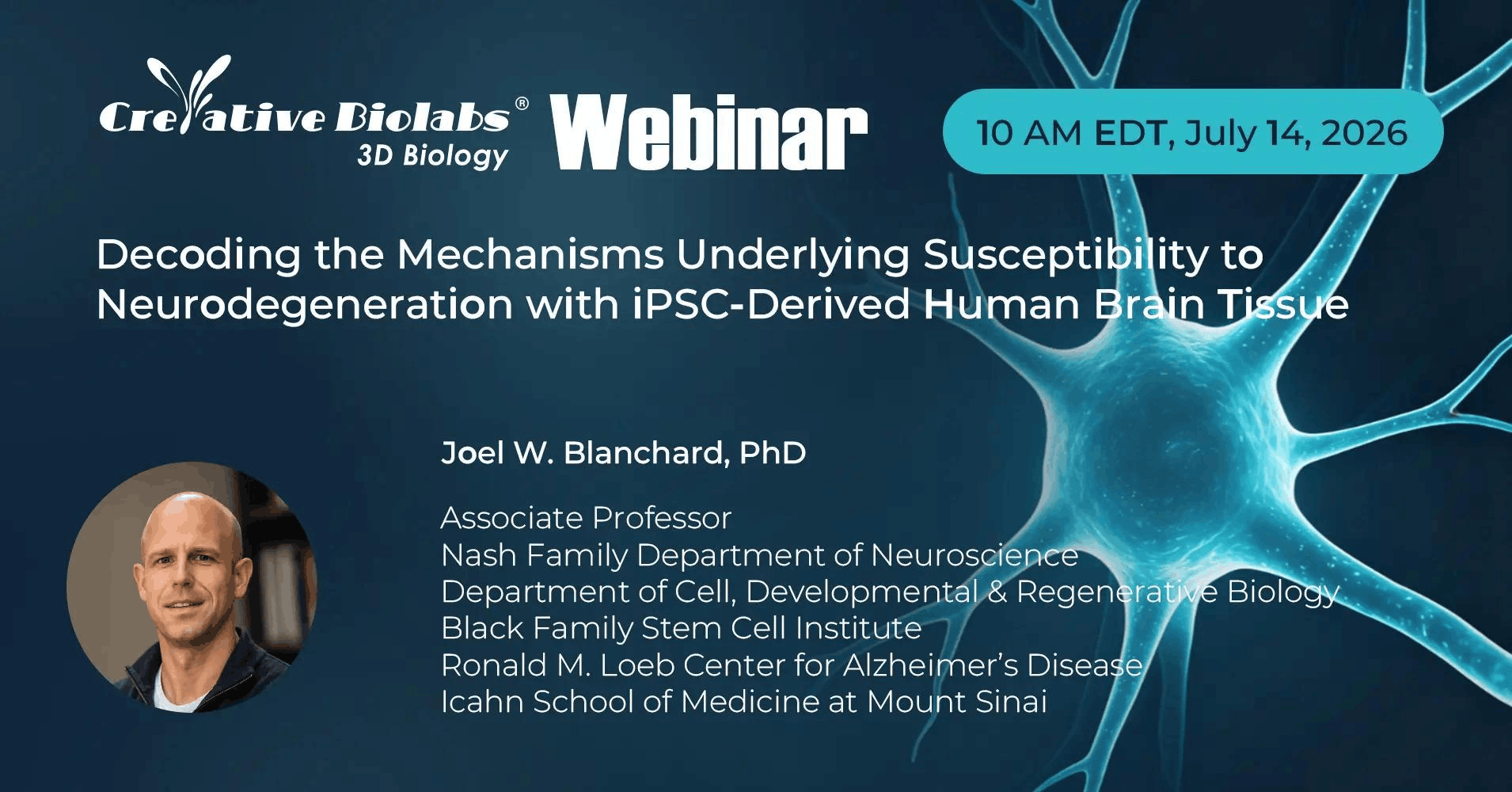
As human-relevant 3D brain models continue to reshape translational neuroscience, researchers are increasingly turning to engineered in vitro systems to better understand the complex mechanisms underlying neurodegenerative diseases. Despite decades of investment, central nervous system (CNS) drug development remains one of the most challenging areas in biopharmaceutical research, with high clinical attrition rates highlighting the urgent need for more predictive preclinical models. Against this backdrop, Creative Biolabs will host a live technical webinar on July 14, 2026, exploring how engineered human 3D brain tissues are advancing disease modeling and supporting more effective CNS drug discovery.
Alzheimer's disease, Parkinson's disease, and related dementias continue to impose an enormous global health burden. Although numerous genetic risk factors have been identified, translating these discoveries into effective therapeutics remains difficult due to the limitations of conventional two-dimensional cell cultures and animal models, which often fail to fully recapitulate human brain physiology.
To address these challenges, Creative Biolabs is bringing together academic and industry experts for an online technical event focused on next-generation human 3D brain models and their applications in translational neuroscience.
Event Details
Date & Time: July 14, 2026 | 10:00 AM EDT
Featured Speaker: Dr. Joel W. Blanchard, Ph.D., Associate Professor, Icahn School of Medicine at Mount Sinai
During the webinar, Dr. Blanchard will discuss how multicellular stem cell-derived human 3D brain tissues can be engineered to reproduce key pathological features of neurodegenerative disorders in physiologically relevant environments. Participants will gain scientific insights into several emerging research areas, including:
- How a rare genetic mutation uncovers a lysosome-polyamine-epigenetic axis involved in juvenile Parkinson's disease.
- The molecular mechanisms through which APOE4 promotes α-synuclein co-pathology via glial dysfunction.
- How genetic factors contribute to cerebrovascular remodeling and blood-brain barrier (BBB) dysfunction in Alzheimer's disease.
- Strategies for applying advanced 3D biology platforms to biomarker discovery and precision medicine.
These topics reflect the growing importance of human-relevant models for understanding disease mechanisms that are difficult to capture using conventional experimental systems.
Increasing evidence suggests that neurovascular dysfunction plays a pivotal role in the progression of many neurodegenerative diseases. Consequently, researchers are seeking more sophisticated in vitro models capable of replicating the complexity of the human blood-brain barrier for mechanistic studies and therapeutic evaluation.
In this context, Creative Biolabs has developed a 3D human blood-brain barrier spheroid model, which incorporates essential components of the human neurovascular unit into a multicellular spheroid system. The platform enables more physiologically relevant assessment of barrier integrity, molecular transport, neurovascular interactions, and drug permeability, supporting translational studies across neurological disease research.
Beyond BBB models, advances in brain organoids, brain-on-a-chip technologies, and other engineered human 3D brain systems are helping bridge the gap between laboratory research and clinical translation. These human-relevant platforms are increasingly supporting biomarker discovery, target validation, neurotoxicity assessment, and other critical stages of preclinical CNS research, enabling more informed translational decision-making and improving model relevance during therapeutic evaluation.
The upcoming webinar is expected to provide valuable perspectives for neuroscientists, translational researchers, and biopharmaceutical professionals interested in leveraging engineered human brain models for neurological disease research. As demand grows for more predictive and clinically relevant preclinical systems, discussions surrounding advanced human 3D brain tissues are becoming increasingly important across both academia and industry.
Researchers interested in learning more about these emerging technologies are encouraged to register for the July 14 webinar and explore how engineered human 3D brain tissues are contributing to the future of translational neuroscience and CNS drug discovery.